
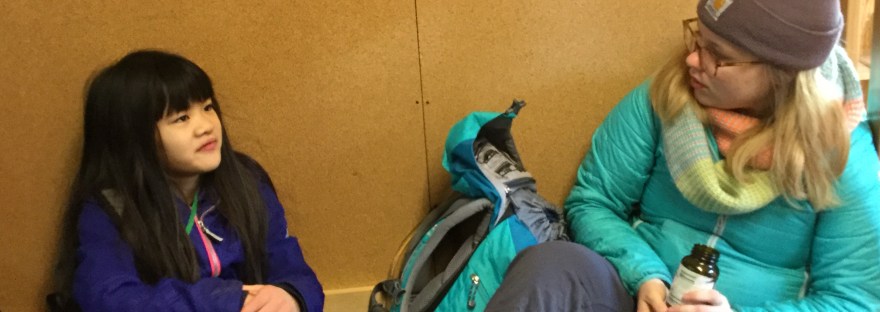
This spring, my main professional goals have been focused around discussion facilitation with students. Before IslandWood, as a 4th grade math teacher, I had a bit of experience facilitating student discussions, but not enough that I felt super comfortable embracing them in the IslandWood context. I decided to center my spring professional growth plan (PGP) around discussions — specifically, probing students for deeper answers, using discussions to transfer learning home, and having more abstract discussions with my groups.
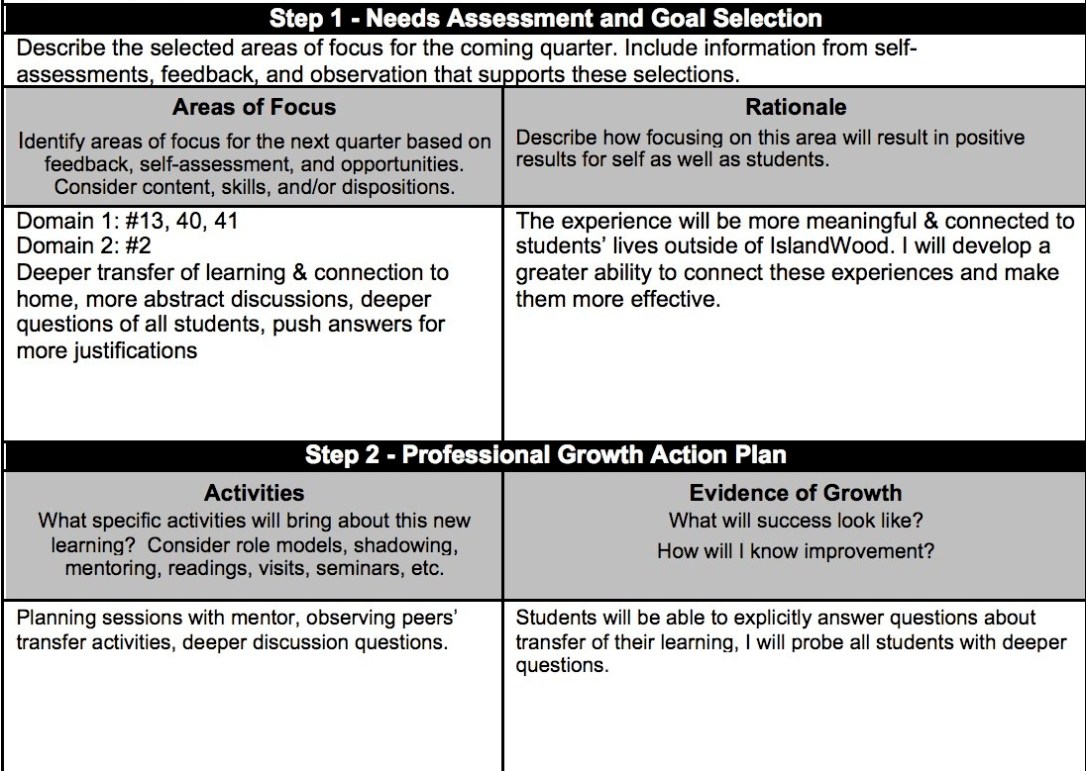
I started planning discussions throughout my teaching and scheduled observations with my mentor to provide feedback on my discussions. We had several planning sessions which provided me with more knowledge, skills, and techniques to utilize when facilitating discussions with students. I was ready to try something new — I set my students up around a campfire to set a reflective mood, generated our discussion norms, and asked the question: What seed did you plant at IslandWood, and how will it continue to grow at home?
My mentor provided me the following feedback after watching this lesson:
You were in the FC for a wrap-up. There was a fire and the students were all seated in the first row of the circle, with you at one end for most of the time. You asked “What makes a good discussion?” Answers from the students included raising hands, two fingers to add on, hand for new idea, listen to the speaker, using a talking piece, eye contact, respectfully disagreeing, watching their tone, calling on people who haven’t spoken, and taking turns. Amazing amount of detailed answers! Holy cow. You said when we talked that they came with some of this, but the sheer amount of ideas was still impressive. The metaphor you were using seemed apt. You asked for them to silently consider the question on the board “What seed did you plant at IW and how will it grow when you go home?” By this point you had also already written their ‘good discussion’ points on the board. What were some of your reasons for not having them write in their journals during this portion of the lesson? You did lots of naming what was happening, such as when students were starting off the discussion and considering when to step up or back from commenting as things went along. You asked another higher level question next: “How do you think team forest grew this week at IW?” Students posited that they were more caring, responsible, respectful, worked together more often, helped each other more, used more supportive talk and worked hard. Pretty thorough and decent answers! You might consider asking for evidence here, as sometimes they provided it and other times they didn’t . You had them do some metacognitive thought near the end, asking “How did team forest do in adhering to our discussion ideas?” This was an every student responds ask for thumbs. Seemed to indicate high adherence based on their self reports. This lesson was still not done, as you finished with rose/bud/thorn, with the bud being something for back home. You really milked the most out of the end of the day. Do you wonder how much the fire adds to the contemplative mood? You also finished with burning something they learned that they want to spread, then cleaning up the FC of trash for stewardship. This lesson looks great!
From this feedback (particularly the bolded lines) I was ready to make changes in my following discussions after this week. In Teach Like a Champion 2.0, I read about the “Everybody Writes” technique, in which students get the opportunity to pre-write about a topic they will later discuss, so they are all prepared to contribute original ideas verbally. I incorporated this into future instruction and found that students provided deeper answers that were less redundant, and students needed less wait time to formulate these ideas. I also began having students record things like discussion norms, goals, etc., to incorporate a different mode of learning and have students generate a written record of these important ideas to refer to later.
My mentor’s note about evidence led me to make more changes. I realized that I had not probed students enough to explain answers or give answers to my expectations – which had not been clear. I expected students to provide evidence in their statements, but did not hold them to this or explain it clearly. Going forward, I was sure to indicate to students as clearly as possible (frequently in writing) exactly what my expectations were from one of their responses. If a student did not meet this expectation, I asked probing questions to get them there. This held all students to the same standard and set them up for success.
I began incorporating more TLAC techniques into my teaching to enhance discussion, such as “No Opt Out”. This technique, which essentially is not taking “I don’t know” as an appropriate response, helped me hold all students to an equally high standard and utilize discussions as an effective assessment tool, since I could count on hearing from all students on questions I needed to.
When I look back on this quarter — even the whole year — I notice an incredible amount of growth in my teaching, especially regarding discussions. Something that initially felt out of reach and intimidating has become a capstone of my teaching practice, and I feel motivated to continue improving in this area and others.
Outcomes:
Knowledgeable Practitioner: By taking feedback and using it to make changes in my future instruction, I developed more effective experiences for my students.
Servant Leader: By utilizing my mentor’s feedback and collaborating in planning sessions, I was able to provide more equitable and inclusive learning experiences in my discussions.

 Julia Tandy Harnick