
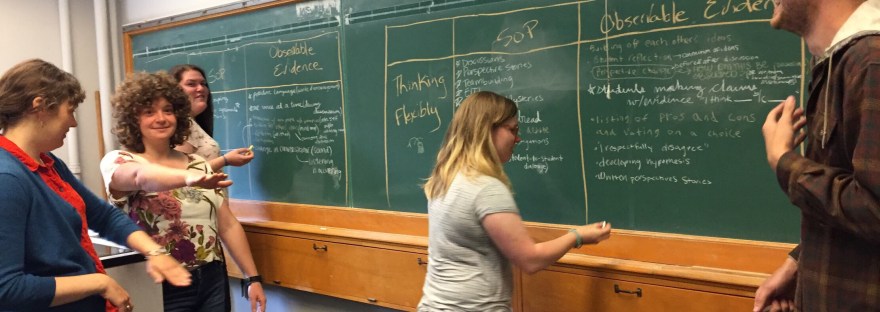
This quarter, I’ve been in an education research methods class at the University of Washington. In this class, we’ve had the opportunity to read the research of others, hear from researchers in the field, and develop a research project of our own with the potential to become our masters work. A huge part of this class has been learning to be critical thinkers about research — learning to read articles & studies, develop our own methods without bias, and listen to outside perspectives with a critical lens. As the quarter comes to a close, I have noticed immense growth in myself and my peers in the course in these regards.
We started the course developing a better understanding for research — different designs, academic language, and trying to get into the minds of the researchers whose work we were reading. Each week, we would hear about a series of studies and articles presented by our peers, who would share with us what was good about the research design and what was problematic or could be improved. For many of us, this was the first time we had thought critically about research in that way. For so much of our academic lives, we are told to check the source, see if it’s peer-reviewed, if it’s scholarly — but not so often to evaluate the articles, studies, or researchers themselves. As I develop a research project of my own, I am able to more effectively evaluate my own methods and findings with a more critical lens, and, as such, create a study with findings that will be more reliable and valid.
Part of our project proposal process has involved thinking critically about the methods we will use to complete our research. We have to evaluate and analyze potential methodology – what are its constraints? Will it cost money? Will it take too much time? Does it have the right priorities? How many subjects can be involved? By comparing our methods with a critical lens, we are able to more effectively design a research project that accomplishes what we intend it to.
Through this experience, I have become better equipped to think critically about sources I come into contact with in my personal and professional life. I have new tools and vocabulary to evaluate research and its biases.

 Julia Tandy Harnick